Small Boat Ownership - Choosing an Outboard
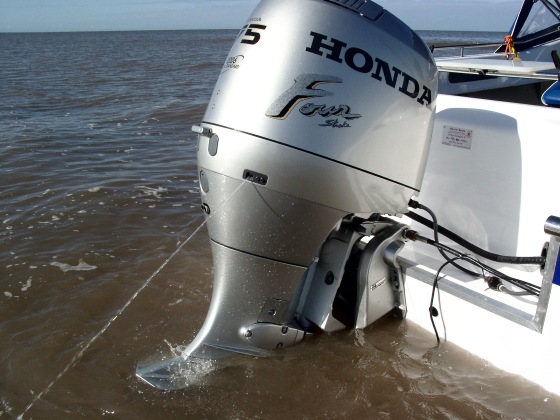
In past when I’ve written articles about choosing an outboard engine from new, the main battle ground was always two stroke versus four stroke. Environmental legislation to enacted in December 2006 has to a large extent laid that particular argument pretty much to rest, though not completely. It will not be illegal for manufacturers to continue turning out two stroke engines, so long as they comply with current emissions standards. With the exception of Evinrude, all other manufacturers selling to the UK look like switching their production over entirely to four stroke technology where the legislative standards are most easily met, though even tighter emission standards in the pipeline will probably require a move away for carburettors to fuel injection. Evinrude on the other hand have developed and patented what they call E-tech technology, allowing them to continue with their two-stroke production. In fact, in light of the many operational advantages of two strokes over four strokes, some of which I will touch on later, the future for E-tech two strokes looks bright. The E-tech Evinrude is claimed to be as quiet as, plus more economical and cleaner than comparable four strokes, as well as able to beat them hands down in terms of on water performance. In addition to this, two strokes generally are also easier to maintain as they don't require engine oil changes, replacement belts, or valve adjustments.
The second hand market however is a very different matter. Transition is probably the best word to describe things there, as more and more used E-tech and four stroke engines become available to swell the ranks of the many two stroke outboards already out there. These two strokes can continue to be used indefinitely as the emissions legislation only applies to new engines bought after the December 2006. So in this context, the arguments pitting two strokes against four strokes are just as valid as they ever were. Let’s take a closer look at them.
ARGUMENTS IN FAVOUT OF TWO STROKES
- Lower overall weight than comparable four stroke
- Better acceleration and in some cases top speed
- Cheaper & easier to repair, service & maintain
- Mechanically more simple, so less to go wrong
- Cheaper to produce so less expensive to buy
ARGUMENTS IN FAVOUR OF FOUR STROKES
- Cleaner running creating less smoke and pollution
- Quieter and smoother
- Better fuel economy than standard two stroke
- Much more reliable & easier start
- Plugs and carburettor doesn't gum up because of oil in the fuel
When four-strokes first hit the scene, it was argued that their higher price tag could (on paper at least) be written off through fuel economies. But not at the rate of a few miles each weekend, if and when the weather permits. So the purchase cost element probably still is a factor. On the other hand, four strokes can always play the reliability card, which to me at least is a very valid argument. When buying new, cost and claimed performance comparisons are going to be the main drivers. But lets not forget reliability, durability and after sales service. It wouldn't be right or proper for me to start naming names and putting my subjective slant on things. So get yourself out there talking to angling users and canvas their opinions. Also, take the time to look at your favoured manufacturer’s track record by checking out the body work of some of their older models, plus any potential horror stories from those who have already spent their money on them. Buying second hand, now that's a totally different ball game, and one in which the individual engine as much as the manufacturer should play a major role in the final decision.
When buying second hand, there are many things you can check out to see if a deal might be on the cards…..
- Ease of cold starting: Most outboards will start okay when warm But what about on a cold, damp winters morning. Try to surprise the seller by turning up early to ensure it has not already been warmed up. If in doubt, check to see if it feels warm.
- Rubber mounts and bushes: These hold the leg in position. Check for wear.
- Run under load: It is advisable to see how an outboard runs on the water, in gear, and pushing something along. Not only is this a performance thing. You can also see if it jumps out of gear.
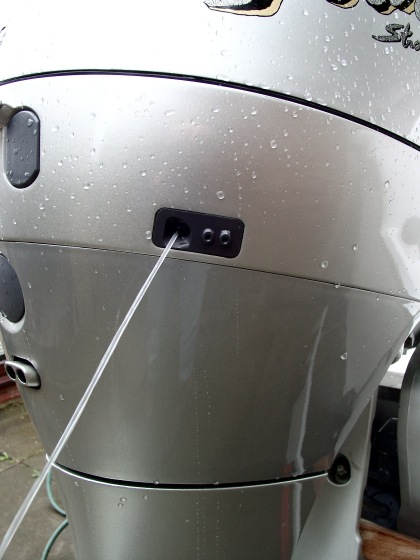
- Run the engine in situ with the muffs on to ensure cooling water is returning under pressure properly.
- Fly wheel: Remove the cowl (engine switched off) and waddle the fly wheel which is the large horizontal circular plate on top, feeling for play in the bearings.
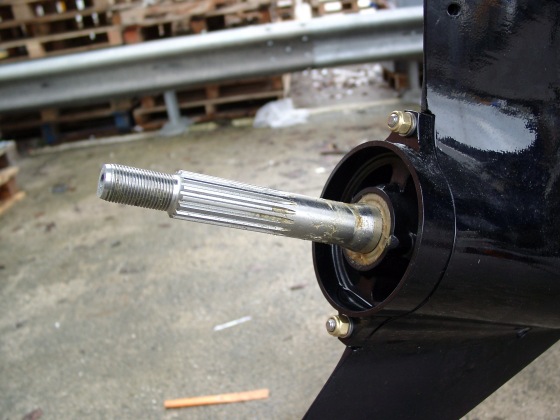
- Ask for the Prop to be removed: Its only a split pin and nut. This should come off easily. Grease on the shaft and splines will ensure this happens. At some stage in the future, the prop might have to come off for repairs. If it won’t don’t buy.
- Check out the prop: look for signs of impact damage. This, along with abrasion, is almost guaranteed to occur when beach launching. Bent or chipped blades throwing the whole prop out of balance need to be rectified by an outboard service centre.
- Check out the skeg: This is the rudder like blade at the bottom of the leg. As with the prop, expect abrasion and minor impact damage. A battered, broken or bent skeg is a different matter.
- Gear box oil: Ask to have the gear box bottom plug removed. Shards of metal on the magnetic end of the plug could indicate gear damage. Emulsified oil on the plug could mean that water is getting into the gear box.
This list is not exhaustive. For private sales, it can pay dividends to take a trained outboard mechanic with you. Second hand dealer sales are a little less worrying as there should be some sort of guarantee to fall back on there. In all cases, ask to see the service records.


One important point to remember when buying an engine, be it new or second hand, is that boats are rated to take outboards only up to a maximum size. This is usually displayed on the maker’s instruction plate. To exceed this rating is dangerous. Doing so will also invalidate the boats insurance. What is not written on the plate is the minimum engine size required to bring the boat up onto the plane allowing it to perform in an economical manner. If you are thinking of buying an engine at the lower end of the size range, ask the manufacturer if it will cope. A typical 16 to 17 foot planing hull should perform perfectly well with a 60 hp outboard. With two anglers on board it should also get up on the plane easily with a 50 hp, and will very likely do 25 to 30 mph, with something in reserve with a 70 hp on the back. I personally would not go higher than 70 for anything of 17 feet or under. We have a 75 on the back of our Warrior 165 which to be frank is physically a bit too heavy, a problem we have sorted out to some extent by fitting trim tabs. Rare are the days when you can open such big engine up anyway. So for the bulk of the time, there is no gain.
For open beach launching I would definitely go for trim and tilt to protect the prop and skeg when coming in onto the beach. On a permanent water mooring it is less important, though always useful for getting the best ride from the way the boat happens to be loaded and balanced on the day, something that can vary from trip to trip depending on how many people or how much gear is on board and how you distribute the weight. It’s useful to be able to lift the outboard leg when coming onto the beach, though it should be added here that this can result in some loss of control which can be worrying in a big following sea. Subtle adjustments to the angle at which the prop is pushing the boat can either bring the nose of the boat up or down. This can be enhanced by the use of a Doelfin fitted to the cavitation plate. But what a Doelfin can't do is adjust the lateral stability. Trim tabs can take care of both these things, and while they aren't cheap, they can over time pay for themselves through fuel economies. Having already dealt with the subject of trim tabs in a separate article, I don’t intend to go too deeply into the subject again now. Essentially trim tabs are two plates controlled by plungers which respond to water pressure balancing the boat up from bow to stern and across its beam, improving the ride, and increasing fuel efficiency, acceleration, and top speed.

One final thought is whether to rely on a single outboard for all your needs, or share the work across two by fitting twin 30’s or maybe even 40’s. Relying on a single power source is no big deal if you are a member of a club and are likely to fish in the company of other boats offering the possibility of a tow back if your are beset by engine or battery problems. Where help is less readily available, it pays either to have a small auxiliary, or fit twins. The drawbacks with an auxiliary are that it won’t bring the boat up onto the plane, so will be less economical. Fine if it uses the same fuel as the main engine. You can feed it using that. A small auxiliary might also struggle with conditions such as wind and tide. If I fished in an area where I had to rely exclusively on myself, then it would have to be twins. But that would probably involve finding a boat suited to taking two outboards. Not all transoms can take two engines due to space, weight, or even both. This also takes you into the arena of the short shaft engine, and the possibility of being stuck with them later because 99% of boat users want long shaft models. It is however something to think about, and if things get serious, discuss with the manufacturer of your particular boat.
SEE THE VIDEO VAULT – Dinghy outfit & Dinghy second hand